
Tree surveys (BS5837) in Canterbury
Tree surveys and arboricultural reports for planning applications and building work near trees in Canterbury.
 Free and no obligation
Quotes for each survey you choose
Free and no obligation
Quotes for each survey you choose
A BS5837 tree survey in Canterbury records the trees on and near your site to British Standard BS 5837:2012, including their condition, category and root protection areas. Designers and the local planning authority use it to position building work so retained trees are protected. It is best commissioned before the design is fixed.
Building work in Canterbury
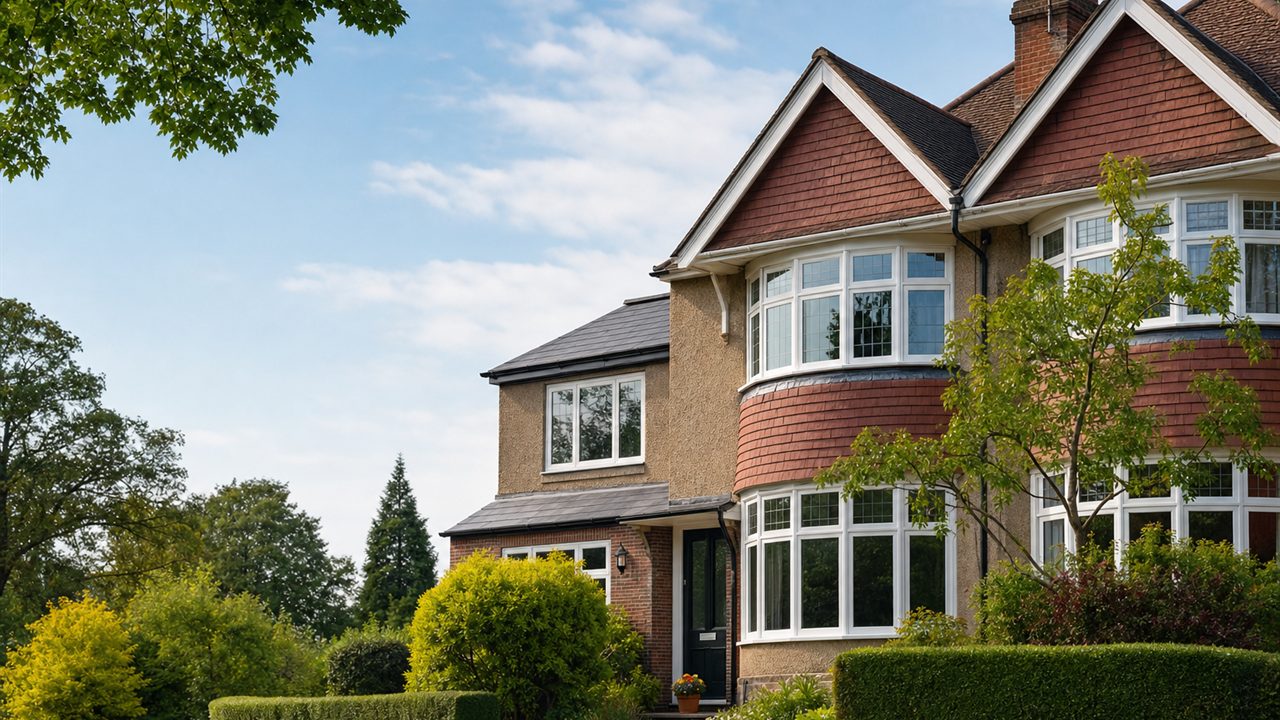
Inter-war semis, detached family homes and period cottages make up much of the South East. Rear and side extensions, loft conversions and garden rooms are popular, and mature gardens often mean trees close to the work.
Planning applications in Canterbury are decided by the local planning authority for Canterbury. Building regulations are checked by the council’s building control service or a registered building control approver, and party wall matters are handled separately between neighbours.
Postcode districts in and around Canterbury include CT1, CT2, CT4, CT5, CT6.
Areas in Canterbury include
- Herne Bay Parade
- Beltinge & Bishopstone
- Herne Bay South & Greenhill
- Hampton, West End & Swalecliffe
- Chestfield & South Tankerton
- Herne & Broomfield
- Whitstable Central & Tankerton
- Whitstable West
- Seasalter
What a BS5837 tree survey records in Canterbury
Every relevant tree on and next to the site, plotted on a plan
Species, height, crown spread and stem diameter
Age, condition and any defects
A category: A (high), B (moderate), C (low) or U (unsuitable for retention)
A root protection area for each retained tree
Reports you may need
Tree survey schedule
Data for each tree
Tree constraints plan
Trees, crowns and root protection areas on a plan
Arboricultural impact assessment
How the design affects the trees
Method statement
How work near trees will be done
Tree protection plan
Where fencing and ground protection go
Trees with a preservation order normally need council consent for most work, and in a conservation area the council generally needs six weeks’ notice. The local planning authority for Canterbury can confirm a tree’s status.
Common projects in Canterbury that involve tree surveys (bs5837)

Extensions near trees
A constraints plan shows where foundations can go without harming roots.
New builds and infill plots
Planning authorities commonly ask for tree information where trees could be affected.
Garden rooms and outbuildings
Screw piles or pads can reduce digging near roots when the RPA is known.
Driveways and patios
No-dig surfaces may be recommended inside root protection areas.
Conservation areas
Work to trees usually needs six weeks’ notice to the council, so surveys are often requested.
What tree surveys cost in Canterbury
Tree survey fees mainly depend on how many trees are involved and which reports you need:
Number of trees
Each tree is inspected and recorded
Reports needed
A schedule and constraints plan cost less than a full impact assessment and method statement
Site size and access
Larger or harder-to-reach sites take longer
Topographical base plan
Plotting is quicker on an accurate survey
Deadline
A report needed quickly for an application may cost more
How the process usually runs
- Tree surveyThe consultant records every relevant tree.
- Constraints planRoot protection areas are shown on a plan for the architect.
- DesignThe architect positions the building around the trees.
- Impact assessmentPrepared with the planning application if required.
- Protection on siteFencing and ground protection go in before work starts.
Before you get quotes in Canterbury
Having these ready means quotes are accurate and easy to compare:
- A site plan or topographical survey if you have one
- Photos of the trees and where you want to build
- Whether any trees are on neighbouring land
- Whether your property is in a conservation area
- Your planning submission date, if you have one
How getting quotes works
Tell us about your project
A few quick questions about your property and the work you are planning.
Choose your surveys
We show which surveys your answers point to. Untick any you do not want.
Compare your quotes
Receive quotes from local professionals for each survey you chose.
Tree surveys (BS5837) in Canterbury: common questions
What is a BS5837 tree survey?
A survey of trees on and near a site to BS 5837:2012, Trees in relation to design, demolition and construction, recording each tree’s details, condition and category.
What is a root protection area?
The area around a tree to protect during construction, normally a circle with a radius twelve times the stem diameter measured at 1.5 metres above ground.
Does the council in Canterbury need a tree survey?
Planning authorities often ask for tree information where trees could be affected. Your architect or the validation checklist for the local planning authority for Canterbury will show what is expected.
What about protected trees?
Trees with a preservation order normally need consent for most work, and in a conservation area the council generally needs six weeks’ notice.
Do neighbours’ trees count?
Yes. Trees on neighbouring land that could be affected are normally included in the survey.
When should I book a tree survey?
Before the design is fixed, so the architect can position the building around the trees rather than redesigning later.
What reports might I need?
Commonly a survey schedule and tree constraints plan, and sometimes an impact assessment, method statement and tree protection plan.
How do I get tree survey quotes in Canterbury?
Enter your postcode, answer a few questions about the project and choose which surveys you want quotes for. Local consultants then send you their quotes.
Guides
Other surveys in Canterbury

Party wall surveyors in Canterbury
Get quotes

Measured and topographical surveys in Canterbury
Get quotes
Structural calculations in Canterbury
Get quotesNearby areas
General information, not legal, planning or structural advice. A professional will confirm how the rules apply to your work. Cost figures are from published guides and are indicative only. Updated September 2026.
Sources: BS 5837:2012 Trees in relation to design, demolition and construction; GOV.UK guidance on tree preservation orders and trees in conservation areas. Area data: ONS local authority and small-area boundaries; House of Commons Library neighbourhood names.